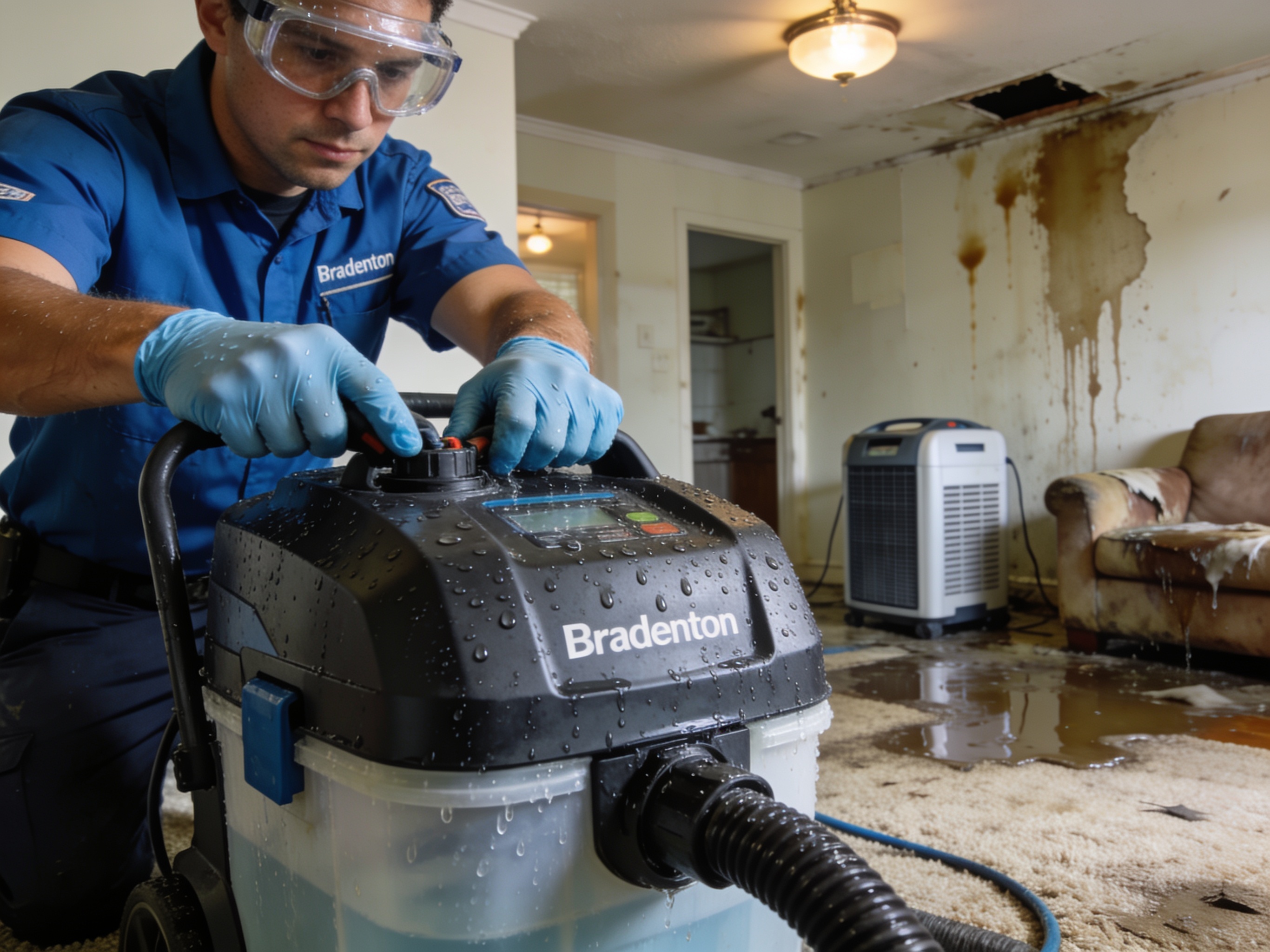
Why Bradenton Homeowners Choose Us for Water Removal
Bradenton homeowners should choose a water removal provider that identifies the source and water category before scoping the job. Removal is matched to depth and surface, moisture is checked beyond the visible wet area, and the hand-off to the next steps is stated clearly.
Source comes first. A supply-line break, a water heater failure or an AC condensate overflow can all put water on a floor, but the leak has to be stopped before extraction is worth doing. We stop the source first or confirm who is handling it, so the work is not wasted.
Category decides handling. Clean supply water and storm or flood water are treated differently. Water that has come in from a river, a creek or heavy rain carries contaminants that change which materials can be dried in place and which must come out. We assess that on site and explain it before removal begins.
Surface decides method. Carpet, tile, wood and a concrete slab hold and release water differently. Carpet usually needs extraction, water collects at the edges of tile, wood can cup or swell, and a slab can hold moisture for longer. Each surface gets its own method.
Moisture is checked past the visible area. A floor can look dry while water sits in the subfloor, at the bottom of a wall or behind baseboards, so readings are taken there too.
The hand-off is explicit. Removal finishes when the standing water is out and the readings show where the moisture went. Drying comes next, then repair of damaged material, covered on our water damage repair page. A mold check is a separate step after drying.
Why Standing Water in a Bradenton Home Should Not Wait
Standing water should not wait because it moves quickly into the materials of a Bradenton house. In a humid Gulf Coast climate, water held in drywall, baseboards, insulation and flooring keeps those materials wet, and the longer it stays, the larger the repair scope tends to become. Waiting rarely shrinks the job.
Water wicks upward and sideways. Drywall takes in water at its base and carries it higher than most people expect. Baseboards hold moisture against the wall, insulation soaks it up inside the cavity, and wood or laminate flooring can swell at the edges. None of this shows from the middle of the room, which is why waiting feels safe and is not.
Humidity slows drying. Florida air already carries a lot of moisture, so wet materials dry slowly unless air is moved and moisture is pulled out of the room. A house closed up with wet walls and a damp floor can keep those materials wet far longer than the homeowner expects.
Flood and storm water needs a different response. The City of Bradenton's floodplain page lists storm surge, river flooding, heavy rainfall and poor drainage on flat terrain as causes of flooding in the city. Storm and flood water is treated as contaminated compared with a clean supply-line leak, which affects what can be dried in place and how the room is handled.
Waiting also changes the repair. Materials that were wet for a short time can often be dried and kept. Materials that stay wet longer are more likely to be cut out, replaced or checked for mold afterward. The earlier the water is scoped and removed, the more options the repair has.
Proof: How a Water Removal Is Scoped and Verified
A water removal is scoped by identifying the source and category, mapping depth and affected materials, and taking moisture readings in walls and floors beyond the visible area. The removal method is matched to each surface, and drying equipment is placed where the readings point. Findings are written down for the homeowner's records.
- The source and water category are identified before any work starts.
- Depth is measured and affected materials are mapped room by room.
- Moisture readings are taken in walls and floors beyond the visible wet area.
- The removal method is matched to each surface, from carpet extraction to hard-floor methods for tile, wood and slab.
- Drying equipment is placed where the readings show moisture.
- Readings are repeated before equipment is pulled, so the final check does not rely on appearance alone.
- Findings are documented for the homeowner's records.
The same readings show whether drying is complete, not just whether the floor looks dry. That distinction is the basis for the drying verification described in the Up Close section below. In Bradenton, that check matters more after a storm, because the City's floodplain page lists storm surge, river flooding, heavy rainfall and poor drainage on flat terrain as causes of flooding in the city.
The Scenario Most Bradenton Water Pages Skip: The Removal That Looks Finished but Is Not
A removal is not finished when the floor looks dry. After heavy rain, a tiled ground floor near the Manatee River side of Bradenton can look clean while water has already wicked into wall cavities and under the floor covering. Visible water comes out first, hidden moisture is found by checking, and cavities are dried before the next steps begin.
Picture a homeowner who pumps the standing water, mops the tile and runs a fan that evening. The floor is dry to the eye by morning. The problem is what a mop cannot reach. Tile sheds surface water to its edges, and water slips under the base and into the gap beneath the covering. Anything that reaches the wall runs down the inside of the drywall and into the bottom of the baseboards, where insulation can hold it long after the surface feels dry.
Hidden moisture is found by checking, not looking. A proper check takes readings along the bottom of the walls, at the baseboards and across the floor under and around the covering. If those readings are high, the plan changes. Wall cavities and baseboards are dried with air movement and dehumidification matched to the readings, and the readings are repeated to confirm progress.
Here is how the job splits honestly. Visible water is removed first. Hidden moisture is then found with readings. Cavities and baseboards are dried. Removal ends once the water is out and the readings show drying is under way. Damaged material such as swollen baseboard, soft drywall or a lifted floor covering is then scoped under our water damage repair service. If the wall stayed wet for a long time, a mold check after drying is the next step, covered by our mold remediation service.
Manatee County's 2024 season shows why this matters. Hurricane Debby brought rainfall totals above 18 inches in some areas of the county, and Hurricane Milton delivered more than 10 inches of rain in parts of the county, with official gauges up to 13 inches. Those are county-wide totals rather than Bradenton city figures, but they show how much water a single heavy event can leave in a house.
Water Removal in Bradenton, Up Close
The water removal Bradenton homeowners rely on covers standing water extraction, storm and flood water removal, and removal after a pipe or appliance leak, plus the drying that follows once the water is out. Each follows the same order: remove the water, verify the moisture, then hand off the next step.
Standing Water Extraction
Standing water extraction removes water that has pooled on a floor. Pumps handle deeper water, and extractors pull water out of carpet and off hard floors. The water category decides how the room is handled, so it is identified before work starts. Crews protect unaffected rooms by keeping water out of doorways and adjoining spaces, so the wet area does not spread. Carpet pad and anything else that holds water is checked during extraction, and the work moves to drying once the standing water is gone. In a Bradenton home, that can mean a living room carpet beside a wet kitchen tile floor, and each surface is handled on its own terms. Water pulled from carpet is not the same job as water pulled from tile, and the equipment is adjusted for each.
Storm and Flood Water Removal
Storm and flood water removal starts from the premise that the water is not clean. Water from a river, a creek or heavy rain can carry contaminants, so porous materials it touches are handled with more caution, and some must come out rather than be dried in place. Clean supply water from a pipe is handled differently, since it is not carried in from outside the house. The City of Bradenton's floodplain page names Riverview Boulevard and East Riverside Drive along the Manatee River, the 1000 block of East Manatee Avenue, and all roadways along Wares Creek as heavy-rain flood-prone locations, and those corridors are the risk map. Because that water carries contaminants, each material it reaches is judged separately, so the scope follows what the water touched rather than what is visibly wet.
Drying After Removal
Drying after removal runs on air movement and dehumidification, matched to Florida humidity. Air movers push air across wet surfaces and into the spaces where water has moved, while dehumidifiers pull moisture out of the air so materials can release what they hold. Moisture is re-checked in wall cavities, along baseboards and under floor coverings, because those are where water hides. Drying is verified complete only when repeat readings show the materials are no longer holding moisture beyond the surrounding dry materials. Until then the equipment stays where the readings point. Air movement and dehumidification run together for as long as the readings call for them, and equipment is adjusted as readings change. Gulf Coast humidity can slow this process, so the schedule is set by the readings, not by how the surface looks.
Water Removal After a Pipe or Appliance Leak
Water removal after a pipe or appliance leak starts by stopping the source. Supply-line breaks, water heater leaks and AC condensate overflows each need the water shut off or the drain line checked before extraction is worth doing. Once the flow stops, the extraction area is usually smaller than in a storm event, because the water is confined to where the leak occurred. In Bradenton, a clean supply-line leak starts indoors, while storm water from flood-prone corridors such as Riverview Boulevard comes in from outside and carries contaminants. Crews still check walls and floors beyond the visible puddle, since leaked water travels behind baseboards and under flooring. Any leak-damage repair that follows, such as replacing soft drywall or a warped floor, is handled as a separate step on our water damage repair service.
Water Removal Questions Bradenton Homeowners Ask
These are the questions about water removal Bradenton homeowners ask most often. The answers explain what removal covers, what follows it, and how the work is scoped for each house. They are answered from how the work is done, not from promises.
Is water removal the same as water damage repair?
No. Water removal takes standing water out of the house and checks where moisture has gone. Drying, repair of damaged material and any mold work come after it. On this site, repair is its own service, so the two are scoped as separate steps. The removal is finished when the water is out and the readings show where the moisture went.
Does it matter whether the water came from a pipe or from a storm?
Yes. The water category decides how the room is handled and which materials can be dried in place and which must be removed. Clean supply-line water and storm or flood water are treated differently. The City of Bradenton links flooding in the city to storm surge, river flooding, heavy rainfall and poor drainage on flat terrain, so storm water is assessed before it is handled like ordinary clean water.
How do you know the water is really gone?
The visible wet area is only the start. Moisture readings are taken in walls, along baseboards and under floor coverings, and drying equipment is moved where the readings show moisture. Readings are repeated before equipment is removed, and the results are written down for the homeowner's records.
How much would water removal cost?
The cost depends on the factors that drive the work, not on a fixed rate. Water depth, the area affected, the water category and the materials involved, such as carpet, tile, wood or slab, all change the scope. We explain each factor in plain terms during the visit so you can see why the work is built the way it is.
Water removal in Bradenton starts with a phone call. If water is standing in your home now, call (941) 541-0415 so the source, the water category and the affected surfaces can be discussed. You can also visit our contact page for the same number.